TL;DR
- Scraping public LinkedIn data is not a crime under US law. The Ninth Circuit confirmed it in the hiQ v. LinkedIn case and reaffirmed it on 18 April 2022.
- But "not a crime" is not the same as "safe." hiQ won the CFAA argument and still paid LinkedIn $500,000, accepted a permanent injunction, deleted its data, and no longer exists as a company.
- LinkedIn's User Agreement (Section 8.2, effective 3 November 2025) bans scripts, crawlers, and bots used to scrape profiles. Scraping is a breach of contract you can be sued over.
- GDPR applies even to public profiles. France's CNIL fined Kaspr €240,000 in December 2024 for scraping LinkedIn contacts with no lawful basis, and GDPR fines run up to €20 million or 4% of global turnover.
- For individual operators, the real risk is an account ban, not jail. LinkedIn escalates from warning to restriction to permanent ban, and permanent bans are rarely reversed.
- If your goal is outbound prospecting, the safest path isn't scraping at all. It's automating inside your own authorized LinkedIn seat at human-safe limits.
👉 Skip the bulk-scrape risk. SalesRobot runs LinkedIn outreach through mobile API tech with human-like limits and zero account bans under Safe Mode. Try it free for 14 days.
Wait, "Not Illegal" and "Safe to Do" Are Not the Same Thing
You searched this because someone on your team said "just scrape LinkedIn, it's legal now."
They're half right. And half right is how people get sued.

Yes, the Ninth Circuit ruled that scraping publicly accessible data isn't a crime. That ruling is real, and it's still good law in 2026.
But that decision answered exactly one question out of three. And the two questions it didn't answer are the ones that actually cost people money.
Most articles stop at "the court said it's fine" and quietly pivot to selling you a scraper. This one won't.
Scraping LinkedIn runs through three separate bodies of law, and each one gives you a different answer. Let's walk all three.
The 3-Layer Legal Test: How to Actually Answer This Question
LinkedIn scraping is the automated collection of profile data (names, titles, companies, emails) from LinkedIn using bots, crawlers, or browser tools.
Whether it's legal depends on which of three laws you're asking about: US criminal law (the CFAA), LinkedIn's User Agreement, and privacy law like GDPR. Each one answers a different question, and they don't always agree.
Here's the trap: a tool vendor quotes Layer 1, you assume you're covered, and then Layer 2 or Layer 3 shows up with a lawsuit or a fine.
So before you run a single scrape, run it through all three layers:
- Layer 1: Is this a crime? (US criminal law, the CFAA)
- Layer 2: Am I allowed to do this? (LinkedIn's User Agreement)
- Layer 3: Can I legally keep and use the data? (GDPR and privacy law)
Different questions. Different answers. Let's take them one at a time.
Layer 1: US Criminal Law (CFAA), Not a Crime With One Big Asterisk
First, the backstory, because this one case is where the whole “scraping is legal” idea comes from.
hiQ Labs was a startup that sold hiring analytics to employers, and its entire product was built on data it scraped from public LinkedIn profiles (the parts anyone can see without logging in). In 2017, LinkedIn sent it a cease-and-desist and cut off its access. Because that public data was hiQ’s whole business, hiQ sued LinkedIn to keep pulling it.
hiQ won the key point. In hiQ Labs v. LinkedIn, the courts held that scraping publicly visible data is not a crime under the Computer Fraud and Abuse Act (the CFAA, the main US anti-hacking law). The Ninth Circuit, a federal appeals court, reaffirmed that on 18 April 2022
The logic is simple. The CFAA punishes accessing a computer "without authorization." But public data, a profile anyone can view logged out, requires no authorization in the first place. The Supreme Court's Van Buren decision in 2021 reinforced this narrow reading.
So if you're pulling public profiles without logging in, you are not committing a federal crime. Good.
Now the asterisk, and it's a big one.
This protection applies only to logged-out, public-facing data. The moment you log in with fake accounts, use someone else's credentials, or scrape behind the login wall, you're accessing data that does require authorization. That drags you right back into CFAA territory.
Layer 1 verdict: public scraping isn't a crime. Behind-the-login scraping can be.
Layer 2: LinkedIn's User Agreement, Legal Doesn't Mean Permitted
Here's the part the "it's legal" crowd skips.
Winning the CFAA argument doesn't stop LinkedIn from suing you. It just changes what they sue you for: breach of contract instead of computer fraud.
And LinkedIn wins those.
Section 8.2 of LinkedIn's User Agreement (effective 3 November 2025) explicitly prohibits scripts, crawlers, browser plugins, and bots used "to scrape or copy the Services, including profiles and other data from the Services." When you made your account, you agreed to that.
Want proof it has teeth? Look at how the hiQ story actually ended. hiQ won the CFAA fight, then lost the war. In a stipulated judgment, it had to:
- Pay LinkedIn $500,000
- Accept a permanent injunction barring it from scraping LinkedIn "whether logged in or not"
- Delete the scraped data and every algorithm built on it
hiQ Labs is now permanently closed.
Layer 2 verdict: scraping LinkedIn breaks your contract with LinkedIn, and that's a lawsuit you can lose even when the CFAA is on your side.
Layer 3: GDPR and Privacy Law, "Public" Does Not Mean "Exempt"
Say you nail Layers 1 and 2: logged out, public only, squeaky-clean collection.
You still hit Layer 3 the second your data is about European people.
A LinkedIn profile is personal data. And under GDPR, "publicly available" is not a blanket exemption. Visibility doesn't erase someone's privacy rights. It just changes which lawful basis you need.
For scraping, that basis is legitimate interest under Article 6(1)(f). GDPR doesn't require consent to scrape, but legitimate interest isn't a free pass. You still have to:
- Pass a balancing test
- Provide a privacy notice telling people you hold their data
- Honor deletion requests
Skip those, and you get the Kaspr treatment.
In December 2024, France's CNIL fined Kaspr €240,000 for scraping LinkedIn contacts, including profiles users had restricted, with no lawful basis and no transparency. These aren't theoretical penalties: under EU and UK GDPR, fines run up to €20 million or 4% of global annual turnover, whichever is higher.
Layer 3 verdict: if your data is about EU or UK people, "it was public" won't save you. You need a lawful basis, notice, and deletion handling.
What the Law Actually Says by Scenario (2026 Status Table)
Three layers, four real scenarios. Here's how each situation stacks up.
A few things jump out.
Sales Navigator is a special case. The hiQ ruling covered publicly available data. Sales Navigator sits behind the login, so that protection doesn't extend to it. LinkedIn also caps every Sales Navigator search at 2,500 results and watches how fast you page through them. Bulk-scraping it is a fast track to a restriction.
The fake-account row is where companies like Mantheos ended up in LinkedIn's crosshairs, using fake member accounts to buy seats and scrape behind the login. That's the high-risk end of the spectrum.
Worth noting: importing leads from your own authorized Sales Navigator seat into a tool like SalesRobot, without a bulk export or fake accounts, is a very different behavior profile than rows three and four. You're still bound by LinkedIn's ToS, but you're not credential-stuffing your way behind the wall.
Will LinkedIn Ban Your Account? The Practical Risk Most Legal Guides Skip
Here's the honest truth for a working salesperson: you will almost certainly never be sued or fined.
For individual operators, the real consequence of aggressive scraping isn't a courtroom. It's a permanent account ban.
LinkedIn automation is a terms-of-service issue far more than a legal one for most people. LinkedIn doesn't send you to court. It quietly nukes your account, and it escalates in a predictable pattern:
Warning → temporary restriction → permanent ban.
And permanent bans are rarely reversed.
So the risk calculus is completely different from the legal one. The question stops being "will I get sued?" and becomes "will I lose the account I've spent years building?"
This is exactly where scraper tools get people in trouble. They hammer LinkedIn with bot-speed requests that trip every detection system it has.
SalesRobot, a LinkedIn-first outreach tool that works from inside your own authorized account, takes the opposite approach. Instead of scraping a database, it runs outreach using mobile API technology that mimics human behavior.
Safe Mode keeps you under LinkedIn’s radar. It applies randomized delays, working-hours scheduling, and human-like daily caps (up to 200 connection requests per week), so your activity looks like a busy professional, not a bot.
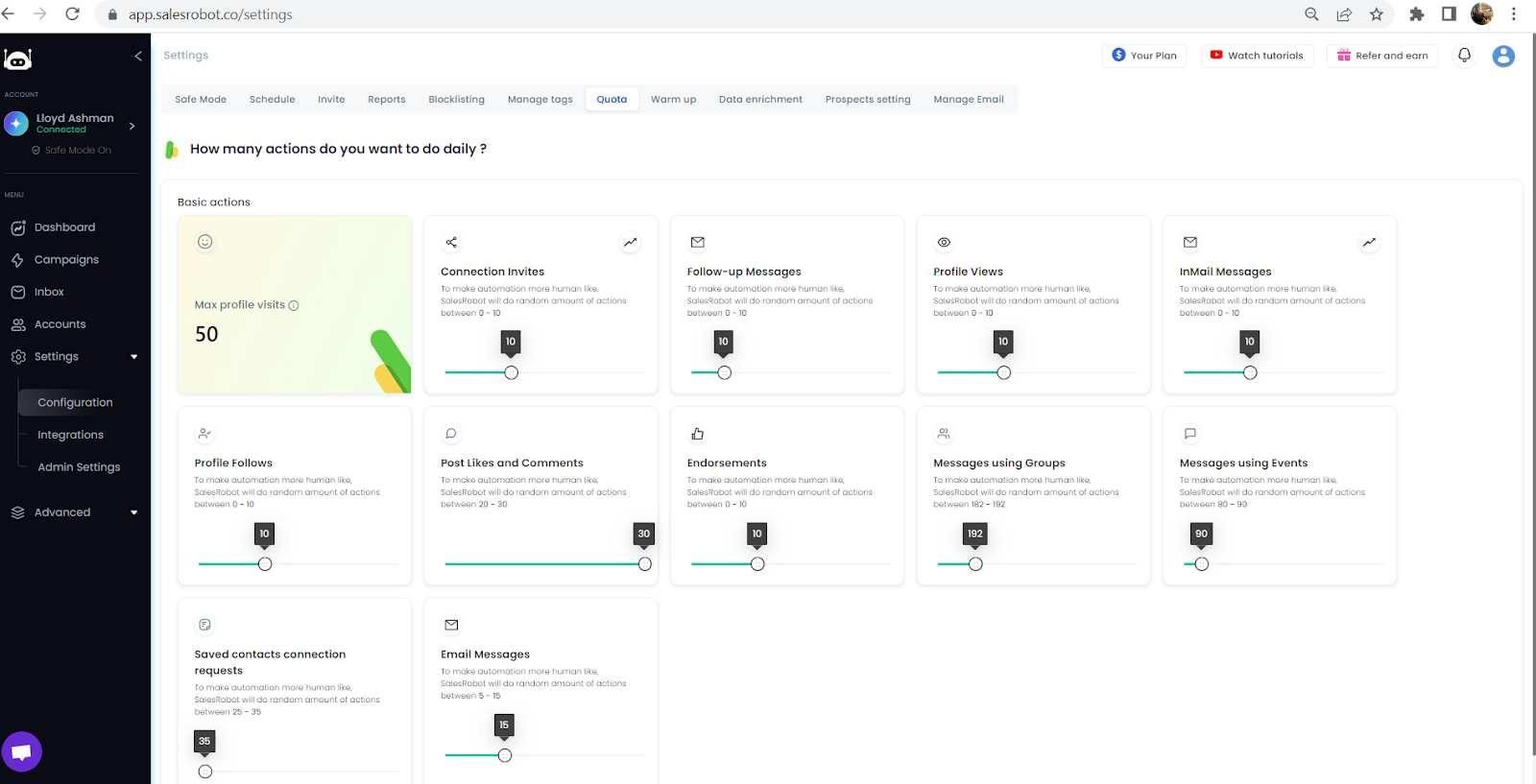
Every account runs on its own residential IP. SalesRobot is cloud-based and routes each account through a dedicated residential IP, instead of firing requests from your office network at machine speed, so it works 24/7 without keeping your browser open.
The result customers report: zero account bans under Safe Mode, while still hitting a 51% connection acceptance rate and a 55% average reply rate.
And because it works inside your own seat rather than off a scraped list, SalesRobot does things raw scraped data never could.
Voice and video that scale. Record your voice once and the AI generates a tailored voice note for each lead, and record one intro video it clones so every prospect gets their own.

Both are on all paid plans (up to 50 a day), and users report 40%+ reply rates on voice campaigns.
A live MCP server lets you run it from an AI assistant. SalesRobot plugs straight into AI tools through a live MCP server at mcp.salesrobot.co, so you can connect Claude (or any MCP-compatible assistant) and create campaigns, pull a prospect list, read the inbox, and draft replies from a prompt.
Think of it as doing outreach at the speed of a very busy human, not a bot. That's the difference between a thriving account and a banned one.
Frequently Asked Questions
Is LinkedIn scraping legal in 2026?
It depends on which law you mean. Scraping public LinkedIn data isn't a crime under the US CFAA, per the hiQ v. LinkedIn ruling. But it breaches LinkedIn's User Agreement (a contract you can be sued over) and triggers GDPR obligations if the data covers EU or UK people. "Not criminal" is not the same as "safe."
Does scraping LinkedIn violate the terms of service?
Yes. Section 8.2 of LinkedIn's User Agreement, effective 3 November 2025, prohibits scripts, crawlers, plugins, and bots used to scrape profiles or data from the Services. LinkedIn enforces this through breach-of-contract lawsuits. hiQ paid LinkedIn $500,000 and accepted a permanent injunction despite winning on the criminal-law question.
Is scraping LinkedIn legal under GDPR?
Not automatically. A LinkedIn profile is personal data, and "publicly available" is not a GDPR exemption. You need a lawful basis (usually legitimate interest under Article 6(1)(f)), plus a privacy notice and deletion handling. France's CNIL fined Kaspr €240,000 in December 2024 for scraping contacts with no lawful basis or transparency.
Is it legal to scrape data from Sales Navigator?
Riskier than public scraping. Sales Navigator data sits behind the login, so the hiQ ruling protecting public data doesn't extend to it. LinkedIn caps every search at 2,500 results and monitors paging speed. Bulk-scraping it breaches the ToS and often triggers account restrictions fast.
Is it legal to buy a scraped LinkedIn email list?
It's the riskiest option on the board. You had no control over how the data was collected, yet you inherit the exposure anyway.
Under GDPR, you still need a lawful basis, a privacy notice, and deletion handling for every contact, which a purchased list almost never comes with. You're also likely holding data that breaches LinkedIn's terms, and if the seller scraped behind the login or used fake accounts, you may be building on a CFAA violation too.
For cold outreach, a list you sourced from your own authorized searches is far safer than one you bought.
Will LinkedIn ban my account for using automation tools?
It can. LinkedIn escalates from warnings to temporary restrictions to permanent bans, which are rarely reversed. The risk comes from bot-speed behavior that detection systems flag. Tools like SalesRobot reduce this with mobile API technology, human-like limits, and randomized delays, and customers report zero bans under Safe Mode guidelines.
Putting It Together: What This Means If You're Running Outbound in 2026
Here's the whole thing in one breath: scraping public LinkedIn data isn't a crime, but it breaks LinkedIn's User Agreement and triggers GDPR the moment EU or UK people are involved.
Three layers. Bulk scraping sits at risk on all three at once.
For the individual operator running outbound, the sharpest risk isn't a lawsuit. It's losing the account you've built your pipeline on.
So the smart move isn't to find a "safer scraper." It's to stop mass-scraping and instead engage inside your own authorized account, at human limits, where you're not exposed on all three fronts at the same time.
That's the lane SalesRobot occupies. It imports leads from your own LinkedIn and Sales Navigator searches without the bulk-CSV-export gymnastics, then runs personalized outreach through mobile API tech with human-like daily limits and Safe Mode, which is why customers report zero account bans. For teams juggling several seats, the playbook for scaling LinkedIn outreach covers how to do it without tripping limits.
One honest reality check: SalesRobot keeps you inside LinkedIn's behavioral guardrails and your own authorized seat. It does not make you GDPR-compliant for how you store or use the data afterward. That's still on you. Get your lawful basis, notice, and deletion process in order regardless of tooling.
SalesRobot is trusted by 4,100+ B2B sales teams, starts at $59/month, and comes with a 14-day free trial, no credit card required. The complete LinkedIn outreach system playbook walks through the full cadence if you want the step-by-step.
👉 Run LinkedIn outreach the safe way instead of gambling with scrapers. Try SalesRobot free for 14 days.

Wow your leads by cloning yourself and sending personalized videos and voice notes to each lead on LinkedIn.
If you don't reply to leads within 5 mins, your chances of converting them fall by 50%. Our AI replies on your behalf instantly! (and yes, you can train it)

Don't shoot in the dark. Get detailed analytics on what's working
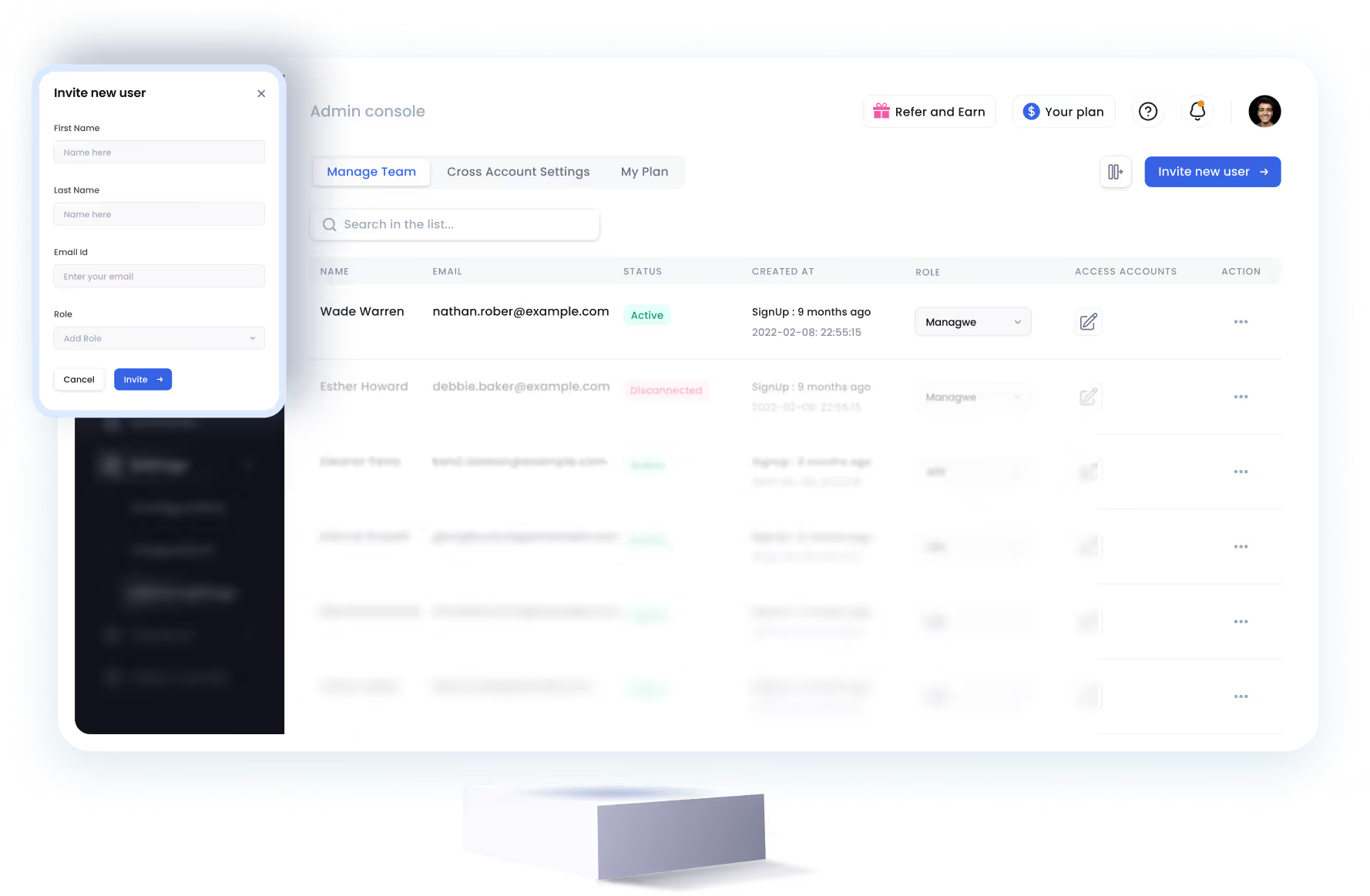
SalesRobot allows you to invite other team members, so that they can add their LinkedIn Account, run outreach campaigns and get amazing results just like you.



Trusted by 4100+ innovative B2B sales teams and lead gen agencies







Heading 1
Heading 2
Heading 3
Heading 4
Heading 5
Heading 6
Lorem ipsum dolor sit amet, consectetur adipiscing elit, sed do eiusmod tempor incididunt ut labore et dolore magna aliqua. Ut enim ad minim veniam, quis nostrud exercitation ullamco laboris nisi ut aliquip ex ea commodo consequat. Duis aute irure dolor in reprehenderit in voluptate velit esse cillum dolore eu fugiat nulla pariatur.
Block quote
Ordered list
- Item 1
- Item 2
- Item 3
Unordered list
- Item A
- Item B
- Item C
Bold text
Emphasis

Superscript
Subscript